SUV · 2020–2024
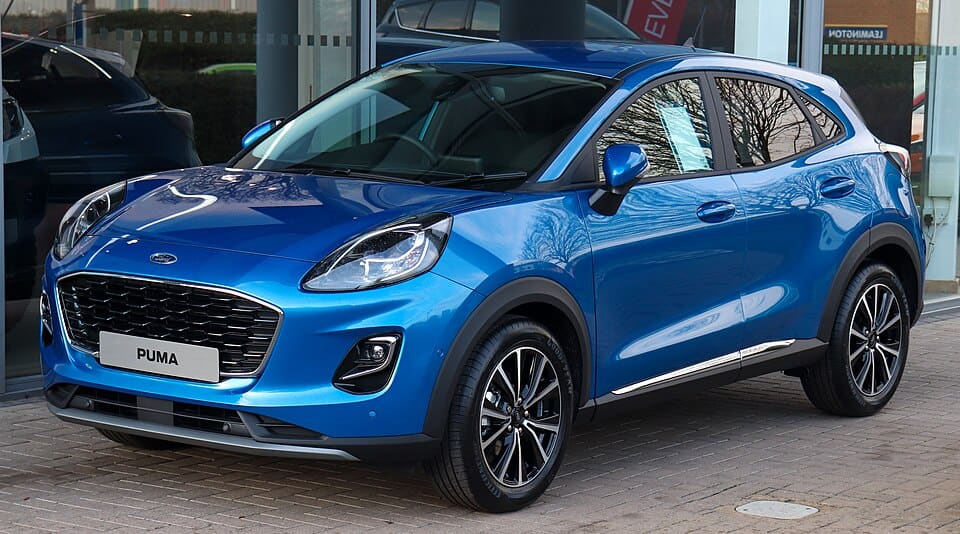
Ford Puma2020–2024 UK specs, running costs & common faults
A crossover on Fiesta bones — sharp to drive with a useful MegaBox boot. Mild-hybrid EcoBoost is the volume seller; ST is the one enthusiasts hunt.
Used-market watch-out: Mild-hybrid battery and 12V system health
Best for: Drivers who want SUV ride height without a heavy chassis.
Indicative running costs ~£2,119–£3,029 / year
- Power
- 155 hp
- Economy
- 48–52 mpg
- Fuel
- Hybrid
- Boot
- 456–1,216 litres
- 0–60
- 8.5–11.5 sec 0–60 mph
- Ins. group
- Grp12–28, depending on trim and power
This 2020–2024 Ford Puma suv guide is for UK buyers and owners of the 1.0 EcoBoost mHEV. It covers tyre pressure, oil, indicative running costs, common trims such as Titanium 1.0 mHEV, ST-Line 1.0 mHEV, ST-Line X, and used-market faults — starting with Mild-hybrid battery and 12V system health.
Ford Puma owner essentials
The lookups people actually search for on a Ford Puma — pressures, oil and spare status. Confirm against the V5C engine code and door sticker.
Tyre size
Commonly 215/60 R17 – 235/50 R19 (trim dependent)
Tyre pressure (cold)
Often ~33–38 PSI cold — always use the door/fuel-flap sticker
Engine oil
Ford-spec 5W-20 or 5W-30 (confirm WSS approval for the engine)
Oil capacity
Typically ~4–5.5 litres
Spare / puncture kit
Spare, space-saver or sealant kit — check the boot well
ULEZ
Most petrols from ~2006 (Euro 4+) are ULEZ compliant — verify the plate
Need a PSI ↔ bar converter? Tyre pressure tool →
Ford Puma UK running costs
Ballpark annual ownership for a private Ford Puma at ~8,000 miles/year.
~£2,119–£3,029 / year
| Cost | Indicative yearly figure |
|---|---|
| Fuel | ~£1014/yr @ 52 mpg, £1.45/L, 8,000 miles |
| Road tax | ~£195/yr typical post-2017 standard rate |
| Insurance | £550–£1,100 (indicative) |
| Servicing | ~£300–£460 for a typical annual service |
| Tyres (avg) | ~£140–£300 averaged over a set |
- · Assumes ~8,000 private miles/year — scale up/down with your mileage.
- · Insurance is the wild card: age, postcode, NCB and claims history matter more than the car alone.
- · Figures are illustrative UK ballparks for planning — not quotes. Use our running-costs tool for a custom budget.
Ford Puma variants & trims
GTI / ST / R-Line / AMG Line are not the same thing — match the boot badge and V5C engine code.
| Variant | Engine | Power | Economy | Road tax |
|---|---|---|---|---|
Titanium 1.0 mHEV Comfort trim mild hybrid. 1.0 EcoBoost mHEV · 48–52 mpg | 1.0 EcoBoost mHEV | 125 hp | 48–52 mpg | ~£195* |
ST-Line 1.0 mHEV Most common used Puma. 1.0 EcoBoost mHEV · 48–52 mpg | 1.0 EcoBoost mHEV | 125–155 hp | 48–52 mpg | ~£195* |
ST-Line X Larger alloys, more kit. 1.0 EcoBoost mHEV · 47–51 mpg | 1.0 EcoBoost mHEV | 155 hp | 47–51 mpg | ~£195* |
ST-Line Vignale Luxury crossover trim. 1.0 EcoBoost mHEV · 47–51 mpg | 1.0 EcoBoost mHEV | 155 hp | 47–51 mpg | ~£195* |
Puma ST Performance Puma. Harder ride, faster tyre wear. 1.5 EcoBoost · 38–42 mpg | 1.5 EcoBoost | 200 hp | 38–42 mpg | ~£195* |
Puma ST Gold Edition Limited paint/kit pack — verify originality. 1.5 EcoBoost · 38–42 mpg | 1.5 EcoBoost | 200 hp | 38–42 mpg | ~£195* |
Automatic / DCT Check dual-clutch service schedule. 1.0 mHEV DCT · 45–50 mpg | 1.0 mHEV DCT | 125–155 hp | 45–50 mpg | ~£195* |
*Indicative annual UK VED. Confirm on GOV.UK.
Ford Puma specifications
Buying a used Ford Puma
- 1Check 12V and mild-hybrid battery health
- 2Inspect MegaBox seal and under-floor trim
- 3ST: look for track abuse and tyre budgets
- · Confirm the exact engine code, trim and gearbox on the V5C before ordering parts
- · Check the latest MOT history and advisories on GOV.UK
- · Compare cold-start behaviour, warning lights and service invoices before buying
Ford Puma common faults
Inspection prompts — not a diagnosis.
- Mild-hybrid battery and 12V system health
- Infotainment software glitches
- Front tyre inner-edge wear if alignment neglected
Ford Puma FAQs
Is a used Ford Puma (2020–2024) expensive to run in the UK?
As a rough guide for the 2020–2024 Ford Puma, many owners should budget ~£2,119–£3,029 / year including fuel, tax, insurance, servicing and tyres at ~8,000 miles/year. Hotter trims and young drivers cost more.
What tyre pressure does a 2020–2024 Ford Puma need?
Often ~33–38 PSI cold — always use the door/fuel-flap sticker. Typical UK sizes: Commonly 215/60 R17 – 235/50 R19 (trim dependent). Pressures change with load and wheel size — the legal reference is the sticker in the door shut or fuel flap, not the sidewall maximum.
What oil does a Ford Puma take?
Ford-spec 5W-20 or 5W-30 (confirm WSS approval for the engine). Capacity is Typically ~4–5.5 litres. Wrong oil on wet-belt / LongLife engines can be an expensive mistake — confirm by engine code in the handbook.
Which Ford Puma variants are common on UK roads?
Typical UK trims include Titanium 1.0 mHEV, ST-Line 1.0 mHEV, ST-Line X, ST-Line Vignale, Puma ST. Specs, insurance group and road tax differ by engine — confirm the exact trim on the V5C.
What are common Ford Puma (2020–2024) problems?
Used Ford Puma buyers most often watch for: Mild-hybrid battery and 12V system health; Infotainment software glitches. Always cross-check MOT history and a pre-purchase inspection.
Is a 2020–2024 Ford Puma ULEZ compliant?
Most petrols from ~2006 (Euro 4+) are ULEZ compliant — verify the plate
Owner handbook
Official Ford manuals for exact oil grades, torque figures and fuse maps. We link out; PDFs stay with the manufacturer.
Ford owner manuals ↗Guides & tools
More Ford UK guides
Similar suvs
Reviewed October 2026. Photos: Wikimedia Commons. Cost figures are illustrative UK planning ranges, not insurer or DVLA quotes. Manufacturer handbook and UK model-year specifications GOV.UK MOT guidance and vehicle test standards Owner and workshop inspection patterns; verify against the specific VIN